Can Massachusetts Lead The World In Psychedelic Opioid Treatment?
Lawmakers advance competing psychedelic therapy bills, are poised to weigh landmark programs for ibogaine and psilocybin
Contributor ·

Can Massachusetts Lead The World In Psychedelic Opioid Treatment?
Lawmakers advance competing psychedelic therapy bills, are poised to weigh landmark programs for ibogaine and psilocybin
By Jack Gorsline
Following the scandalous defeat of a broad legalization ballot measure in 2024, Massachusetts lawmakers continue to defy political norms in the Bay State. This time, they advanced two out of a national-record dozen proposed psychedelic measures that were filed on Beacon Hill last year.
Most recently, on March 18, the Joint Committee on Mental Health, Substance Use and Recovery advanced two key bills aimed at establishing state-sanctioned pilot programs for psychedelic therapies. Now heading to the Joint Committee on Health Care Financing, the narrowly tailored legislation signals a renewed political appetite for integrating these treatments into traditional healthcare frameworks through rigorous oversight and controlled clinical administration.
Advocates and key sponsors, including state representatives Marjorie Decker and James O’Day, as well as state Sen. Cindy Friedman, are optimistic that 2026 will be a breakthrough year for reform. Proponents argue these medicalized pilot programs offer the commonwealth a unique opportunity to deliver cutting-edge treatments to vulnerable populations while leveraging its globally recognized biomedical infrastructure.
“Massachusetts has an exceptionally strong pool of local medical research expertise,” said Graham Moore from the leading Bay State plant medicine advocacy organization Mass Healing. “As the details of a proposal take shape, it is important that this talent be utilized so we can create a best-in-class program and not simply play catch-up with other states.”
Prioritizing patient care and the potential of ibogaine
While the proposed Act establishing a pilot program for access to regulated psilocybin focuses initially on psilocybin, the current volatile federal regulatory landscape suggests that such a state-specific pilot may soon be superfluous.
With the US Food and Drug Administration expected to greenlight psilocybin-assisted therapy later this year, concluding a decade of clinical trials spearheaded by leading psychedelic pharmaceutical company Compass Pathways, Massachusetts lawmakers have strategically engineered both bills with legislative elasticity. One includes provisions that allow for the program to pivot its focus, while the other explicitly facilitates the integration of alternative psychedelic compounds into the medical pilot framework.
Consequently, policy experts and medical researchers have identified ibogaine as the compound uniquely suited for the commonwealth’s research-oriented approach. Derived from the root bark of the African iboga shrub, ibogaine has demonstrated a singular capacity to rapidly mitigate opioid withdrawal symptoms and suppress substance cravings. For Mass, which continues to grapple with the devastating impacts of the opioid epidemic, a strictly regulated ibogaine program could represent a transformative public health intervention. Furthermore, preliminary data suggests that ibogaine possesses neuro-regenerative properties with high potential for addressing post-traumatic stress disorder and traumatic brain injury.
Because ibogaine carries distinct cardiac risks necessitating intensive medical oversight and remains far from federal approval, the establishment of a state-level pilot would position Massachusetts at the global vanguard of clinical research. This potential to pioneer safe, controlled treatments for complex trauma is already garnering significant praise from national advocacy groups.
“The advancement of these bills is a definitive signal that Massachusetts is serious about securing authentic solutions for veterans and all Americans who are struggling to access effective care for trauma-related mental health conditions,” according to Logan Davidson, policy director for Veterans Exploring Treatment Solutions.
“We are seeing meaningful momentum on this issue across the country, and when a state with the Bay State’s clinical stature steps forward, the impact resonates far beyond its borders,” Davidson added. “While critical work remains, [the movement of these bills is] an encouraging sign that policymakers are prepared to meet this crisis with the gravity it deserves.”
Stakeholder divisions and endorsements
The advancement of these bills is part of a broader, sustained wave of interest around this realm of policy in Mass.
In January 2025, a record number of legislative proposals related to psychedelics were filed in the Massachusetts legislature, reflecting a growing bipartisan consensus that novel treatment paradigms are required to address intractable mental health crises. This trend has been accompanied by significant shifts within the state's traditional medical establishment. Last July, the Massachusetts Psychiatric Society made headlines by becoming the first regional branch of the American Psychiatric Association to formally endorse multiple bills aimed at decriminalizing psychedelics for medical use. The move signaled a profound shift in institutional attitudes toward these previously stigmatized compounds among mainstream healthcare professionals.
However, the path toward a unified regulatory framework has not been entirely collaborative, and deep ideological divisions persist among key stakeholders. The ongoing debate has frequently pitted proponents of a highly regulated, clinical medical model against grassroots plant medicine advocates who favor broader decriminalization, cognitive liberty, and equitable access outside of traditional, expensive healthcare settings.
One particularly polarizing figure in this ongoing legislative debate is Colin Beatty, the co-founder of the Massachusetts-based Control Z Health, an organization dedicated to treating adults suffering from PTSD, anxiety, depression, and substance use disorders. Beatty emerged as a lightning rod for controversy after testifying in favor of an Act authorizing a pilot for the use of psychedelics in licensed treatment facilities last June. Following his testimony, he was criticized by grassroots advocates who objected to his explicit opposition to broader decriminalization measures.
Beatty’s stance underscores the deep tension between corporatized, clinical healthcare approaches and grassroots activism in the emerging psychedelic space. During a previous legislative hearing, Beatty heavily criticized the failed 2024 Yes on 4 ballot initiative, characterizing the push for recreational legalization as “a mistake representing an irrational exuberance about the potentials of psychedelics.” He stated his preference for a strict, clinical medical model in his own family’s struggles, saying: “I founded my previous company … because I couldn’t find humane, medical … care in the community for a loved one of mine.”
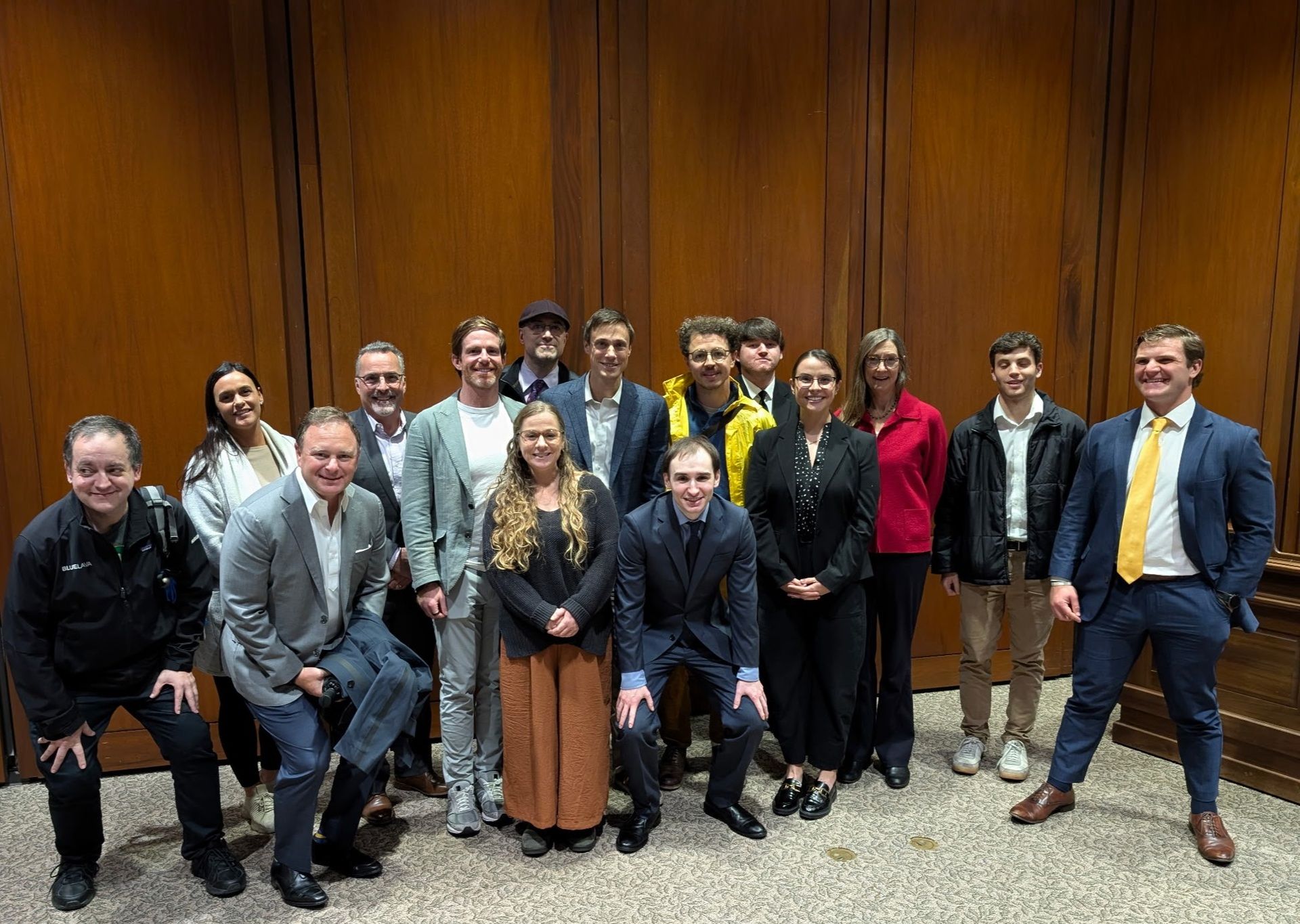
Pictured: MA Grassroots Psychedelic Advocates on Nov. 10, 2025
The Economics of Psychedelic Reform and Corporate Lobbying
Lobbying over Massachusetts' psychedelic policy reform significantly intensified in 2025. The aforementioned Compass Pathways reported $54,000 in expenditures during the first half of the year — a notable increase from $32,100 in 2024. Disclosure records indicate the company is largely bypassing the legislature, focusing its influence instead on the governor’s office and the Department of Veterans Services. Simultaneously, traditional healthcare entities are spending heavily to shape the emerging regulatory framework; Health New England Inc. and the Massachusetts Association of Health Plans invested a combined $140,000 over the same six-month period.
This influx of institutional capital underscores a profound shift in the state's political dynamics: the conversation surrounding psychedelics has moved definitively from fringe advocacy into the complex realm of mainstream healthcare economics. As H.4200 and H.2203 await scrutiny by the Joint Committee on Health Care Financing, lawmakers face the delicate task of balancing the urgent, life-or-death needs of patients against the financial interests of biotechnology firms and regional insurers.
Amidst this corporate lobbying, grassroots organizations remain poised to push the boundaries of the legislation before the end of the term. Drawing inspiration from recent policy innovations in states like New Mexico, advocates are fighting to ensure the final bills prioritize broad research and equitable patient access.
“Mass Healing is mobilizing a statewide coalition — bringing together veterans, first responders, patients, caregivers, clinicians, researchers, and other stakeholders — to help advance these bills and position Massachusetts as a national leader in safe, innovative, patient-centered psychedelic care,” said Jamie Morey, Executive Director of Mass Healing and Founder of Parents for Plant Medicine. “We’re pushing for a bold, compassionate pilot program that goes beyond psilocybin alone to include research into other promising therapies like ibogaine... while also ensuring equitable access through solutions like the treatment equity fund pioneered in New Mexico's medical psilocybin program, so that cost is not a barrier to healing.”


Reader comments
Join the conversation. Comments are reviewed by our editors before they appear.
Loading comments…