Opinion
PSA's Sunday Morning Sound-Off: November 23, 2025
Massachusetts hearing illuminates new state-level psychedelic lobbying activity, the psychedelic renaissance reaches Puerto Rico, and Attorney Kathryn Tucker brings psychedelics to the dying.

This is… Psychedelic State(s) of America
PSA Sunday Morning Sound-Off: November 23. 2025
The Rundown
- Excerpt: Massachusetts Weighs Psychedelic Pilot Programs
- Sunday Longread: Psychedelic Renaissance Reaches Puerto Rico
- Excerpt The Attorney Leading the Fight to Bring Psychedelics to the Dying
- PSA Event Alert: 11/24 Psychedelic Author Spotlight in NYC with Mattha Busby
Massachusetts Lawmakers Weigh Psychedelic Pilot Programs
From hearings to endorsements and ongoing lobbying, Mass grapples with how to safely and effectively integrate psychedelic-assisted therapies
By Jack Gorsline
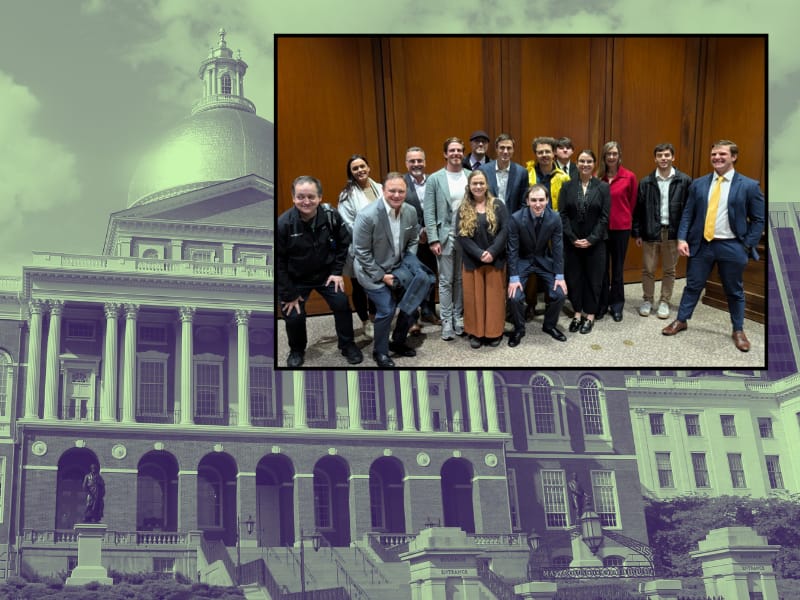
Massachusetts Lawmakers Weigh Psychedelic Pilot Programs (Photo by Jamie Morey)
From hearings to endorsements and ongoing lobbying, Mass grapples with how to safely and effectively integrate psychedelic-assisted therapies
Two weeks ago, members of the Massachusetts legislature’s Joint Committee on Mental Health, Substance Use and Recovery heard testimony for two competing legislative proposals that would establish pilot programs for psychedelic-assisted therapy in the state.
H.2203, An Act Establishing a Pilot Program for Access to Regulated Psilocybin, and H.4200, An Act Authorizing a Pilot for the Use of Psychedelics in Licensed Treatments, share the goal of exploring therapeutic uses for psychedelics but differ in scope.
The former, introduced by state Rep. Marjorie Decker, would create a broad psilocybin access program, while the latter, sponsored by state Rep. James O’Day and Sen. Cindy Friedman, proposes a narrower pilot program that could incorporate a wider range of psychedelic compounds like MDMA or ibogaine in licensed treatment facilities.
New precedents and psychedelic complexities to consider
This latest hearing follows a record number of psychedelics-related proposals being filed in Mass back in January. Furthering the trend, in July the Massachusetts Psychiatric Society (MPS) became the first branch of the American Psychiatric Association (APA) to formally endorse multiple psychedelic decriminalization bills.
The path forward, however, hasn’t been entirely cohesive. One polarizing stakeholder is Colin Beatty, the co-founder of a Massachusetts-based healthcare organization focused on treating adults with PTSD, anxiety, depression, and substance use disorders. After Beatty testified in favor of one particular bill in June, grassroots plant medicine advocates criticized him for explicitly opposing broader decriminalization measures.
In his prior testimony, Beatty slagged the failed 2024 Yes on 4 ballot initiative, calling it “a mistake representing an irrational exuberance about the potentials of psychedelics.” His testimony last week noted the personal experience that led him to this realm: “I founded my previous company … because I couldn’t find humane, medical … care in the community for a loved one of mine.”
….
Read the full story at the Boston Institute for Nonprofit Journalism.
SUNDAY LONG READ:
Psychedelic Renaissance Reaches Puerto Rico
According to organizers, the mission of the summit was to catalyze public, clinical and policy engagement with psychedelic medicine in Puerto Rico, centering local needs and cultural frameworks. The event included panels and talks on research, ethics, integration, ancestral practices, legal reform, mental health care models and community access.
By Veronica Castillo
Puerto Rico hosted its inaugural Puerto Rico Psychedelic Summit 2025 (PSPR25), which brought together researchers, clinicians, community advocates, policymakers and psychedelic enthusiasts. Organized by the Pravan Foundation, the gathering explored the role of psychedelic medicines in mental health, and their policy and cultural frameworks in Puerto Rico and countries outside the U.S.
The choice of location for PSPR25 was strategic. Puerto Rico, as a U.S. territory under federal law but with unique cultural, economic and regulatory dynamics, offers a compelling testbed for psychedelic policy and research. Organizers see a chance to develop clinical infrastructure, community education and regulatory models locally, before or alongside broader U.S. shifts.
The legal status of psychedelics in Puerto Rico mirrors U.S. federal policy in which the possession, sale or cultivation of psilocybin and other classical psychedelics remains illegal and classified as Schedule I substances under the Controlled Substances Act. This means that these compounds are considered to have no accepted medical use and a high potential for abuse. As states and municipalities have adopted local decriminalization policies or authorized research frameworks, these reforms are now being explored in Puerto Rico.
The Pravan Foundation Leads The Discussion
The Pravan Foundation, co-led by Executive Director David Melchor and Medical Director Dr. Tania Rivera, is leading the movement in Puerto Rico to integrate mental health, psychedelic therapies and public education. .
The summit sought to propel tangible change: from building clinical trial infrastructure and influencing local policy discourse to shifting public perception. Pravan’s ambition is that Puerto Rico might one day reschedule psilocybin for medical use locally, even ahead of full FDA approval, if research, training and safety standards align.
The foundation is currently focusing on creating clinical training and practitioner education and public outreach about mental health and psychedelics. The nonprofit is also forging policy and research collaborations to expand evidence-based use of psychedelic-assisted therapies.
“Over the last few years, Pravan Foundation has shifted psychedelic conversations in Puerto Rico from the margins to the mainstream,” said Melchor. “What was once a taboo subject is now a structured, evidence-driven discussion. Education leads to legitimacy, clinical capacity to credibility, policy literacy to constructive debate.”
In the lead-up to PSPR25, Pravan announced plans to partner with the University of Puerto Rico Medical Sciences Campus to initiate clinical research into psychedelic therapies, starting with ketamine and potentially expanding to other compounds. The foundation also said it is building AI-driven research platforms to collate global literature, map outcomes and deliver summaries targeted toward clinicians and policymakers.
“We are launching strategic collaborations with the University of Puerto Rico Medical Sciences Campus to expand clinical research, starting with ketamine and moving toward other compounds as regulatory windows open,” said Dr. Rivera. “Puerto Rico has a unique opportunity, not just to follow FDA timelines, but to responsibly lead.”
Catalyzing Engagement in Puerto Rico
According to organizers, the mission of the summit was to catalyze public, clinical and policy engagement with psychedelic medicine in Puerto Rico, centering local needs and cultural frameworks. The event included panels and talks on research, ethics, integration, ancestral practices, legal reform, mental health care models and community access.
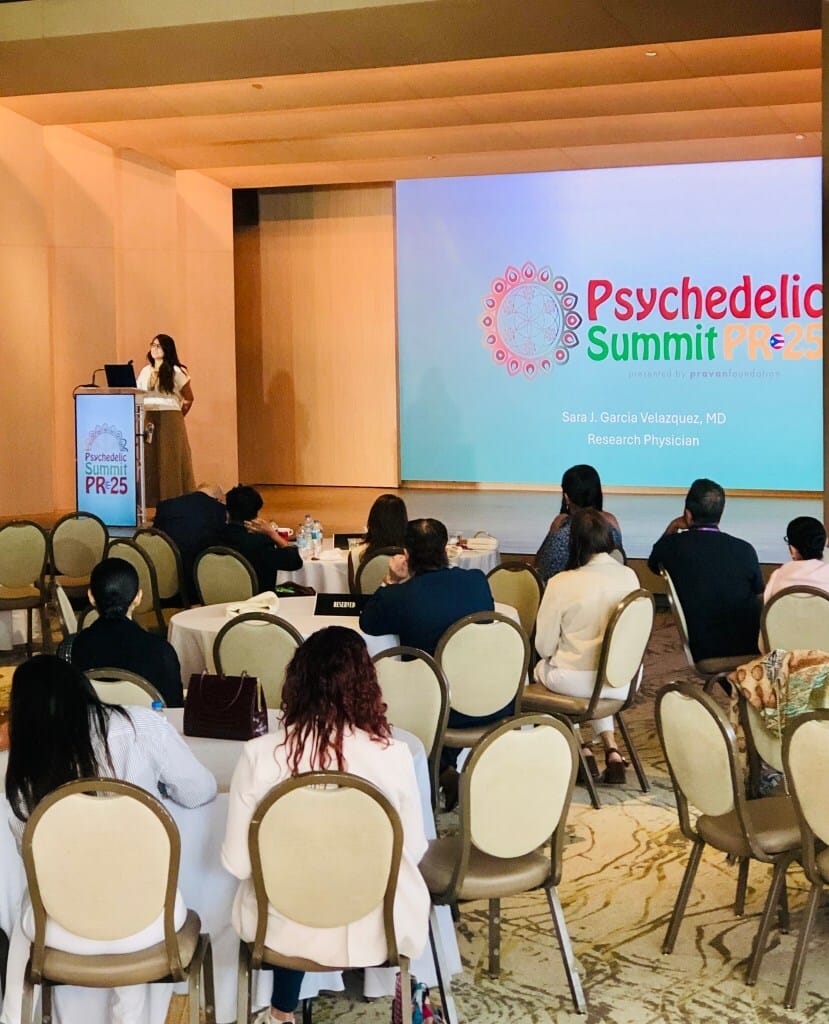
Dr. Sara García Velázquez speaking about MDMA-assisted therapy. Credit: Veronica Castillo.
Featured speakers at the conference included attorney Sean T. McAllister, who spoke about policy and legal frameworks, Dr. Paulina Rullán, who presented information about ketamine-assisted psychotherapy, and Dr. Carmen Amezcua and Dr. Sara García Velázquez, who provided insights on psilocybin psychotherapy and on MDMA-assisted therapy, respectively. Jonathan Dickinson also talked about ibogaine for veterans and addiction, Dr. Leopoldo J. Cabassa reimagined mental health through the lens of psychedelics, and Carlos Barsy shared his thoughts on ancestral practices. A presentation about end-of-life psychedelic care was led by Christine Pateros and Wilhelmina DeCastro.
According to attendee Salvador Verduzco, the most impactful presentations were those by transpersonal psychologist Carlos Barsy and Dr. Carmen Amezcua, a psychiatrist and author. “They offered a culturally rich perspective on indigenous practices involving plant medicines, showing how these plants serve as connections to inner divinity and nature,” said Verduzco. “As we integrate psychedelics into modern therapeutic models, we must acknowledge and respect their cultural lineage and the psychological and spiritual import they carry.”
The organizers held the summit primarily in Spanish, with translation devices available for non-Spanish speakers. Presenters emphasized that psychedelic experiences must be intentional and matched to patient context.
Summit presenters noted that Mexico has one of the most diverse populations of psilocybin fungi in the world, underscoring both the biogeographic and cultural importance of Latin America to psychedelic research. Attendees also noted parallels with cannabis. In many jurisdictions, psychedelics remain illegal until pathways for profit or clinical commercialization emerge for well-resourced actors.
In Mexico, psilocybin mushrooms are broadly illegal, but Article 195 bis of the Federal Penal Code exempts their use in traditional spiritual practices or ceremonies, protecting the cultural and religious rights of indigenous communities. Mexico has a long tradition of ritual use of plant medicines, and local tolerance for ayahuasca and psilocybin retreats exists in some indigenous territories.
In Brazil, psilocybin and psilocin remain illegal, but the law does not penalize the natural occurrence of psilocybin mushrooms, creating a legal mismatch where the active ingredient is banned but the fungal organism itself is not explicitly prohibited.
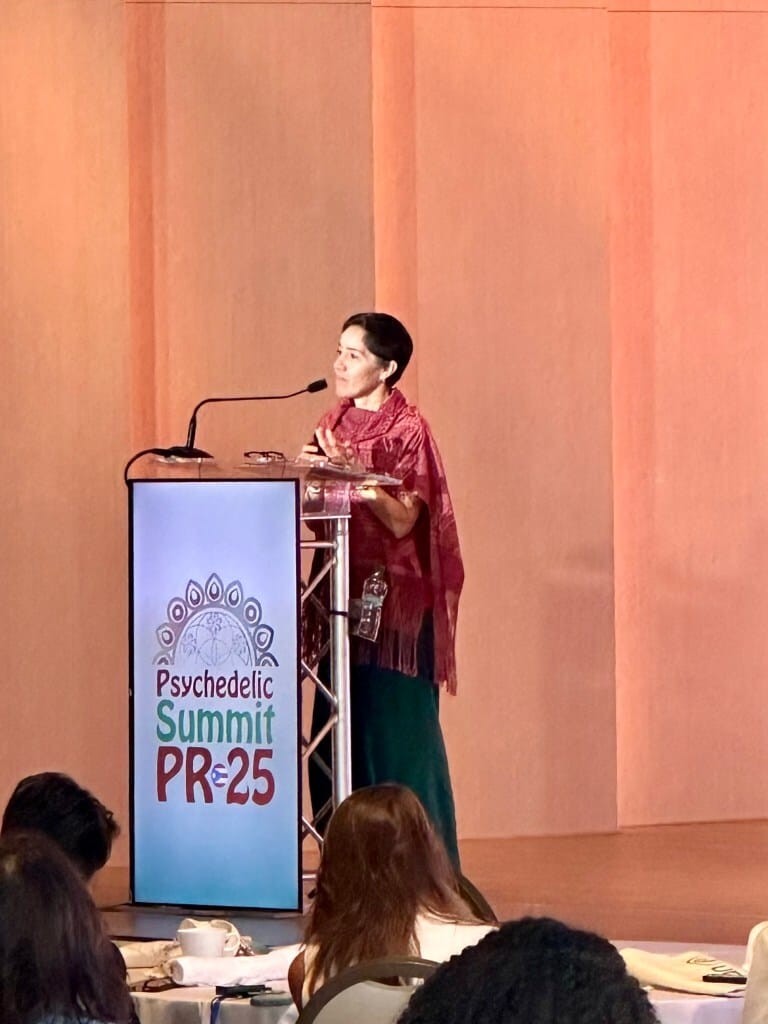
Dr. Carmen Amezcua speaking about psilocybin psychotherapy. Credit: Veronica Castillo.
The Future of Psychedelics In Puerto Rico and Beyond
Beyond Puerto Rico, the summit drew attention from Latin America and other parts of the U.S., fostering cross-jurisdictional dialogue about regulation, indigenous knowledge and equity in access. Many viewed the event as a launching pad for sustained momentum, not a one-off conference.
Conversations at the conference included discussions about future laws and access to psychedelics in Puerto Rico, including possible local regulatory frameworks similar to those developed in other states. Attendees were in broad agreement that psychedelic experiences must be tailored to individual psychological needs, set and cultural context. The gathering reflected a momentum around lowering regulatory, educational, and translational barriers from research into practice.
Among policy reform advocates, there was robust interest in orienting consumption as medicinal or intentional, rather than recreational. Presenters spoke of insights generated by both clinical research and lived experience. Presentations spanned from beginner-level framing to intermediate research discussions and traced how ancestral access and indigenous knowledge were disrupted by colonial and legal prohibition.
“Events like the Puerto Rico Psychedelic Summit create spaces where multiple communities can come together to learn about advances in this field, the challenges we face and opportunities to strengthen the psychedelic ecosystem in the archipelago, said Dr. Juliana Millán-Torres, Director of the Colectivo Psicodélico de Puerto Rico “The gathering brought together health professionals in Puerto Rico, both experienced practitioners and newcomers, all eager for insights from expert speakers. It also offered a chance for leaders from diverse communities to deepen connections and inspire collaborative projects rooted in equity, inclusivity and access.”
The 2025 Puerto Rico Psychedelic Summit marked a milestone: the island’s first large-scale gathering devoted to bridging science, policy, heritage and community in the realm of psychedelic medicine. In a region where regulatory and cultural barriers remain high, the summit demonstrated both the appetite and the organizational infrastructure for change. While significant challenges lie ahead: federal policy, safety protocols, equitable access, and ensuring the voice of local and indigenous communities. PSPR25 offered a tangible foundation.
This article is syndicated in partnership with Lucid News. If you want to see more reporting like this, make a contribution at lucid.news.
The Attorney Leading the Fight to Bring Psychedelics to the Dying
After decades shaping end-of-life law, attorney Kathryn Tucker is taking on federal bureaucracy to make psilocybin a legal medicine for those with no time to wait.
By Christine Divine
Kathryn Tucker, the nation’s leading end-of-life rights attorney, keeps a figurine of a distraught jester on her desk. Each time a federal agency finds a way to stall her pursuit of bringing psychedelics to the dying, she turns its face of theatrical despair toward whoever she’s speaking to. The gesture is both comic and tragic—the humor of a woman who has spent nearly forty years negotiating with bureaucracy. In her world, delay is never neutral. It is measured in suffering.
“The Drug Enforcement Administration (DEA) obstructs and delays,” she said. “But my clients don’t have the luxury of time.”
For Tucker, delay is mortal. Her clients are terminally ill, people in hospice care, often weeks from death, seeking legal access to psilocybin, the psychoactive compound in “magic mushrooms.” In tightly controlled studies at Johns Hopkins and New York University, a single guided session with psilocybin has brought what Tucker calls “immediate, substantial, and sustained relief” from the anxiety, depression, and existential terror that shadow the end of life. Yet under federal law, psilocybin remains a Schedule I substance, defined in the Controlled Substances Act as having “no currently accepted medical use in treatment in the United States.”
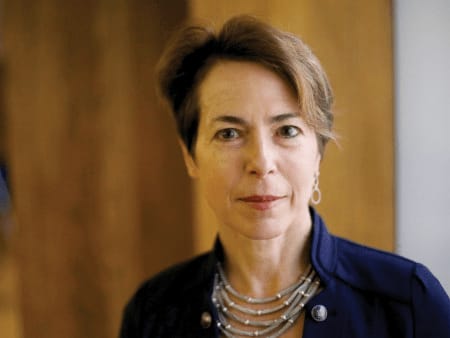
Attorney Kathryn Tucker.
The absurdity of that contradiction—“absurd” being the word used by Johns Hopkins researcher Matthew Johnson—has made Tucker the unlikely general of a moral legal revolution. She is suing the federal government, again, not to secure a right to die but a right to peace before death. In the process, she has exposed a deeper flaw in the system: a government built to deliberate without a mechanism for mercy when time itself becomes a patient’s most finite resource.
“When you are talking about people with terminal illness, they only have a short time to live,” she says. “The delay means that people are left with debilitating anxiety and depression. They don’t get relief, and they die when they could have had relief. It is justice delayed; it is justice forever denied for that population.”
This is the axis of Tucker’s life: a belief that the law should serve mercy, and that time itself must be treated as a form of justice…
Read Christine’s full article in Lucid News.
PSA Event Alert
PSA and friends present….


Reader comments
Join the conversation. Comments are reviewed by our editors before they appear.
Loading comments…